

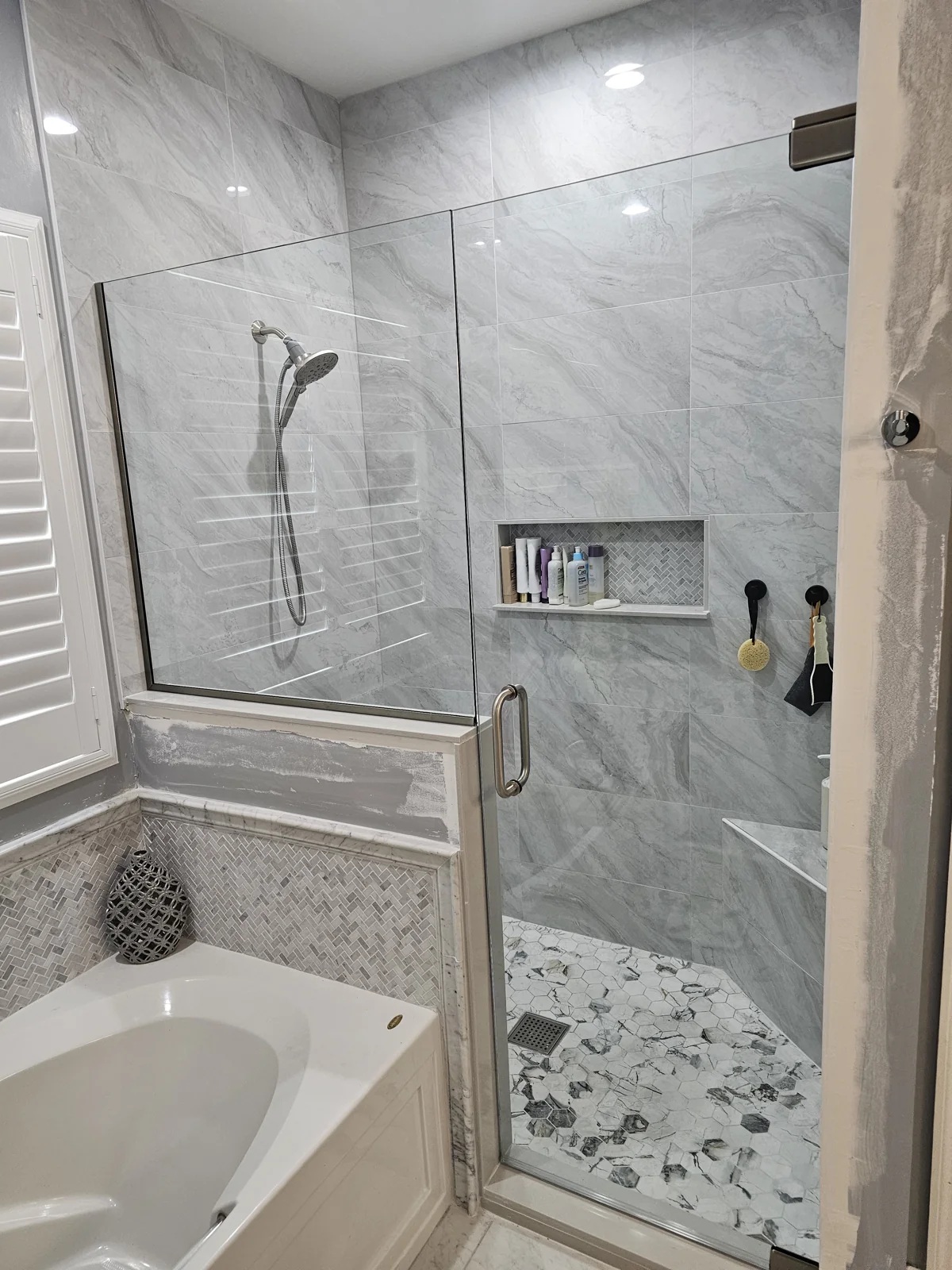
Before asking for a bathroom remodel estimate, decide what you want to change, what you hope to keep, and which problems matter most. A few room photos, a rough list of surfaces, and examples of finishes you like can help Phil understand the project without requiring you to design every detail first.
You do not need a complete shopping list or final measurements to begin the conversation. The aim is to explain the work you are considering so the room, materials, and installation can be assessed together.
Stonesetter of SWFL works on bathrooms, flooring, and kitchen backsplashes in Naples, Bonita Springs, and Estero. Use the checklist below to prepare a bathroom request, then confirm the particular work and property with Phil.
Write down what you want the room to do better
Start with the reason for the change. The shower may be difficult to use, the floor may need replacing, or you may want a different arrangement of finishes. Describe the problem in everyday language before choosing a tile color or a fixture.
Separate the things you need from the things you would like. A floor replacement might be essential, while changing the wall tile could be optional. That distinction helps you discuss a workable scope instead of treating every idea as equally important.
Explain how the room is used. It may be the only bathroom in the home, a guest bathroom, or part of a primary bedroom. Tell Phil about practical needs that affect your choices, including ease of cleaning, storage, and how people move through the space.
Avoid assuming that one product will solve every concern. A photo of a room you like can explain the appearance you want, but the right application and installation still depend on your own bathroom.
Make a keep, replace, and discuss list
Walk through the room and list the parts you expect to keep or replace. Include the floor, shower or tub area, wall finishes, vanity, mirror, and fixtures where relevant. Label uncertain items as questions rather than making a decision before the assessment.
This is a scope list, not a statement that every item is provided by one contractor. Ask which parts Stonesetter will handle and whether any separate trades or arrangements are needed. An estimate should make that division understandable.
Keeping an item can also require discussion. If you hope to retain a vanity while replacing the floor, explain that early. Ask how the adjoining work will be assessed and what needs to be considered around edges and transitions.
For a tub-to-shower idea, describe the change you have in mind and why. Confirm the proposed layout, work, and products before assuming the conversion will fit the existing space or meet a particular access requirement.
Take photos that show the whole room
Begin with a view from the doorway if you can take it safely. Add views of the shower or tub, floor, vanity, and areas you want changed. Include the surrounding surfaces so the relationship between them is clear.
If there is a visible concern, photograph it separately without removing anything. Explain what you noticed and when. A stain, crack, or loose surface should be assessed; a photograph alone does not establish what is happening behind the finish.
Do not remove tile, open a wall, or disturb plumbing to gather details for an estimate. Tell Phil if an area is difficult to see. The next conversation can establish what further assessment is appropriate.
Keep unrelated personal items and documents out of the photos where possible. Share the property address and access information directly with the business, rather than placing private details in a public comment.
Use rough measurements as a starting point
If you already have basic room measurements, include them and label them as approximate. A simple sketch can show where the door, shower, tub, and vanity are located. You do not need professional drawing software to explain that arrangement.
Say what each measurement refers to. The room floor, a shower wall, and the footprint of a vanity are different areas. A number without a label can lead to a different understanding of the proposed work.
Do not use your rough measurements to order materials before the installation requirements are confirmed. The amount needed, cuts, layout, and product details should be checked for the actual job. Ask who takes final measurements and who approves the order.
If measuring requires reaching over an unsafe surface or climbing, leave it for the assessment. Clear photos and a description of the room are enough to begin asking about a project.
Choose examples that explain your preferences
Save a small set of images showing the features you like. Tell Phil what matters in each one: the tile size, color, grout appearance, shower layout, or transition between surfaces. That explanation is more useful than sending a large collection with no notes.
Also identify what you do not want to change. You might like a new shower finish while keeping the room's existing colors. The aim is to explain the intended result in your own space, not to copy every feature from a different home.
Product suitability needs a separate check. Daltile's floor-tile guidance discusses selecting products for their intended application. Ask about the exact tile's approved use, surface, and care instructions before choosing it for a bathroom floor or shower.
A product that looks right in a photo is not automatically suitable for every surface. Keep the manufacturer's information for any product you are considering so its use can be discussed with the installer.
Ask about the work beneath the finish
The visible tile is only part of the installation to discuss. Ask what preparation is needed, how the existing surface will be assessed, and which installation system is proposed. The answers should relate to the selected products and the room's actual condition.
For a shower or tub surround, ask specifically how water protection is addressed. Schluter's waterproofing guidance distinguishes areas such as showers and tub surrounds from other tiled floors. The details depend on the assembly and the manufacturer's instructions.
This is a question to include in the estimate discussion. It does not mean Stonesetter uses a particular manufacturer's system or that a named product is right for every bathroom. Ask for the proposed approach to be explained for your project.
If existing materials must be removed before some conditions are visible, ask how discoveries will be handled. Agree on the approval process for additional work rather than assuming that every possible repair is included in the first estimate.
Decide how material choices will be made
Ask who will supply the tile, grout, trim, and other agreed materials. Confirm which items are included, which are allowances or choices still to be made, and which you would be responsible for obtaining. Do not assume that a photo sent during planning is an approved order.
For an owner-supplied item, discuss suitability and delivery before purchasing. Keep the product name, dimensions, application guidance, and installation instructions available. Ask what happens if a product arrives damaged, is unavailable, or does not suit the agreed installation.
Color and finish decisions deserve a clear record. If possible, review the actual sample in the room's lighting rather than relying only on a screen. Make sure the chosen product can be identified later if another box or matching trim is needed.
A written selection list can prevent confusion between similar products. Include the specific product, color, size, and any related pieces once agreed. Ask who confirms the final quantities and when the choices need to be settled.
Discuss access and life in the home
Tell Phil whether the home will be occupied during the work and whether this is the only bathroom available. Ask how room use, access, and the sequence of work will be discussed before you make other arrangements.
Explain parking, stairs, elevators, gates, and any building-management procedures that affect entry. If a community or association has written requirements, make them available for review. Confirm who handles the relevant arrangements; do not assume a general estimate includes them.
Ask which belongings need to be moved and who will move them. Discuss protection, cleanup, and debris handling in terms of the actual proposed work. Avoid assuming a particular furniture-moving or cleaning service is included.
Also agree on how questions and changes will be communicated. Knowing who makes decisions and how approvals are recorded can help keep material choices and scope changes clear once the project begins.
Compare the scope in each estimate
Read what the estimate includes before comparing totals. Look for the surfaces involved, removal and preparation, materials, installation, finishing details, and cleanup where these are part of the proposal. Ask about any item that appears in one estimate but not another.
An allowance or undecided product is different from a final selection. Ask how that item will be resolved and how a changed choice affects the proposal. Keep the agreed product information with the accepted scope.
Clarify exclusions and separate work. If plumbing, electrical work, glass, cabinetry, or another item is outside the proposed service, ask how it will be coordinated and who is responsible. These questions do not imply that Stonesetter provides every trade.
Finally, ask how a change will be documented. Replacing a tile choice, adding another surface, or changing the layout can affect the original agreement. Get the revised work approved before treating it as part of the job.
A bathroom estimate checklist to save
You can begin with a short note. Complete the items you know and leave the rest as questions for the conversation.
- Explain what is not working well in the current bathroom.
- List the surfaces and fixtures you want kept, replaced, or discussed.
- Attach room photos and approximate labeled measurements if available.
- Share a few finish examples with a note explaining what you like.
- Identify any products already purchased or being considered.
- Explain whether the home is occupied and another bathroom is available.
- Mention parking, entry, and building-management requirements.
- Ask about preparation, water protection, material supply, cleanup, and separate work.
- Confirm how selections, scope changes, and scheduling will be agreed.
You can discuss a preferred timeframe, but ask about availability before booking related work or relying on a completion date. Product selection and the final scope still need to be established for your bathroom.
Questions you can leave for the assessment
Do I need to choose all the tile before asking for an estimate?
No. Explain the look, surfaces, and choices you are considering. Ask what needs deciding before a useful proposal can be prepared. Wait for product suitability and quantity checks before treating a preliminary choice as ready to order.
Can the estimate guarantee what is behind the current tile?
Ask what can be assessed before removal and what may need a later decision. Visible finishes can hide conditions that photographs do not establish. A clear process for discussing additional work helps you understand how the agreement will be handled.
Should every estimate include the same work?
For a useful comparison, ask each contractor to identify the scope clearly. Different totals may describe different materials, preparation, or exclusions. Resolve those differences before deciding which proposal fits the project you actually want.
Talk with Phil about your bathroom
Discuss a bathroom project or call (239) 326-9641. Start with the room, what you want to change, and the decisions you still need help making.
You can also browse Stonesetter's work and confirmed service areas. The estimate conversation should turn your ideas into an agreed scope for your own home, with the materials and installation considered together.